


In this guide 7
You opened a long on Bitcoin. The price did not move a dollar, you did not add or close anything, and a day later the balance is smaller than it was. Nothing broke. That was the funding rate, a payment between traders on perpetual futures that is charged on a schedule with no pop-up to warn you.
01Why funding exists#
A regular futures contract has an expiry date. On that day it settles at the price of the underlying asset, and any gap between the contract and the asset closes by itself.
A perpetual contract has no expiry. You can hold it forever. So what stops its price from drifting 20% away from the real price of Bitcoin and staying there?
Funding does. It is not an exchange fee and not a charge for leverage. It is a payment between traders that makes it expensive to sit on the crowded side of the market. The exchange works as the accountant: it calculates and transfers, but the money goes from one group of traders to another.
02Who pays whom#
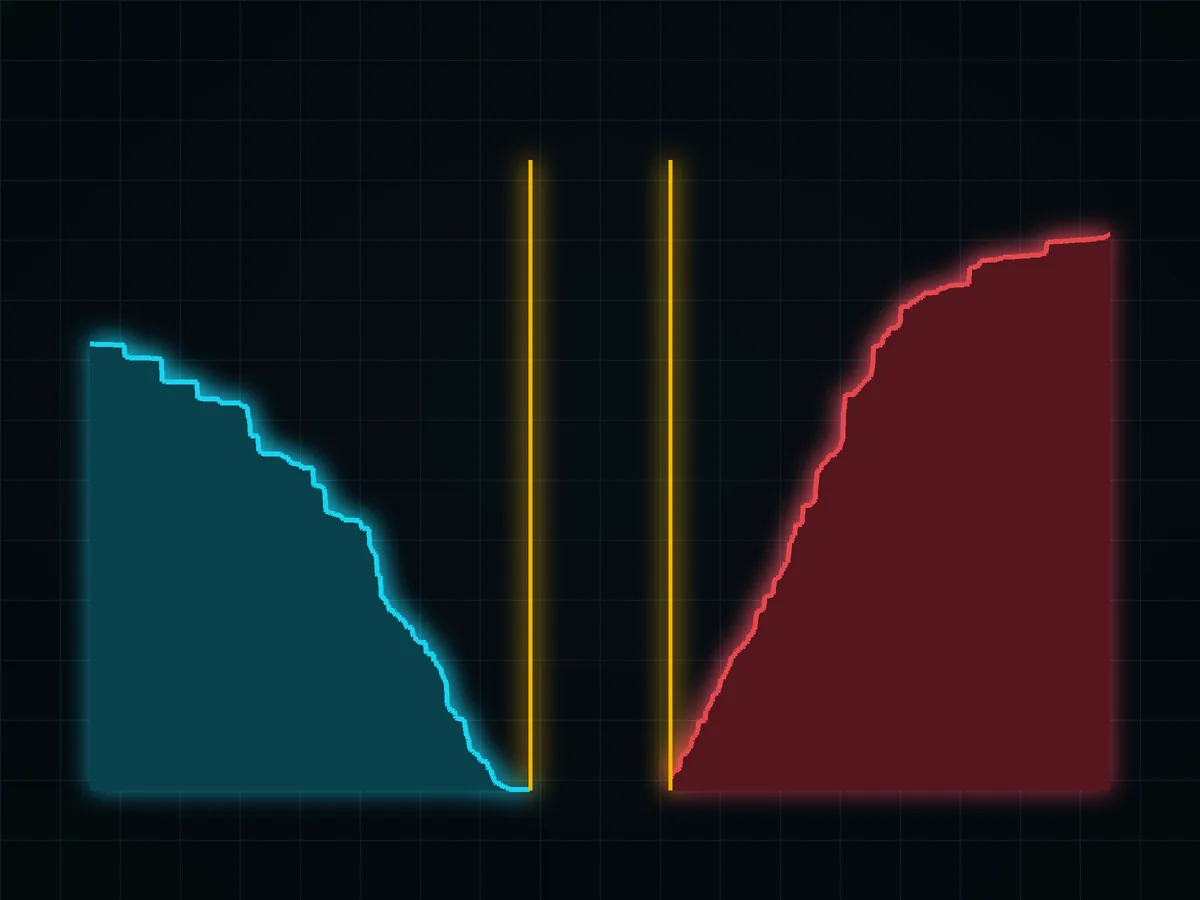
One rule, and it is short: the side that is bigger pays.
- Positive rate. The contract trades above spot, longs are crowded. Longs pay shorts. The market is greedy.
- Negative rate. The contract trades below spot, shorts are crowded. Shorts pay longs. The market is fearful.
That is why it works as a balancing spring. The stronger the imbalance, the more it costs to stay on the popular side and the more it pays to stand against the crowd. Some traders cannot stand the payments and close, the imbalance shrinks, and the prices converge.
How the rate is built#
On large exchanges the rate usually has two parts: a premium (how far the contract trades from the index price) and a small built-in interest component, commonly 0.01% per 8-hour period. When the premium is small, the funding rate simply equals that 0.01%. That is why you see 0.0100% so often on a calm market.
A real day for scale: on October 22, 2026 the BTC-USDT perpetual on BingX settled funding three times, at 0.0019%, 0.0100% and 0.0078%. Longs paid shorts each time, and all three were at or below the calm baseline.
03How much it costs in money#
The usual baseline is about 0.01% every 8 hours. It looks like nothing. Run the numbers:
- 0.01% × 3 periods a day = 0.03% per day.
- 0.03% × 365 days ≈ 11% per year, paid by the crowded side.
- In a heated market the rate can reach 0.1% per period and more. That is 0.3% a day, about 110% a year.
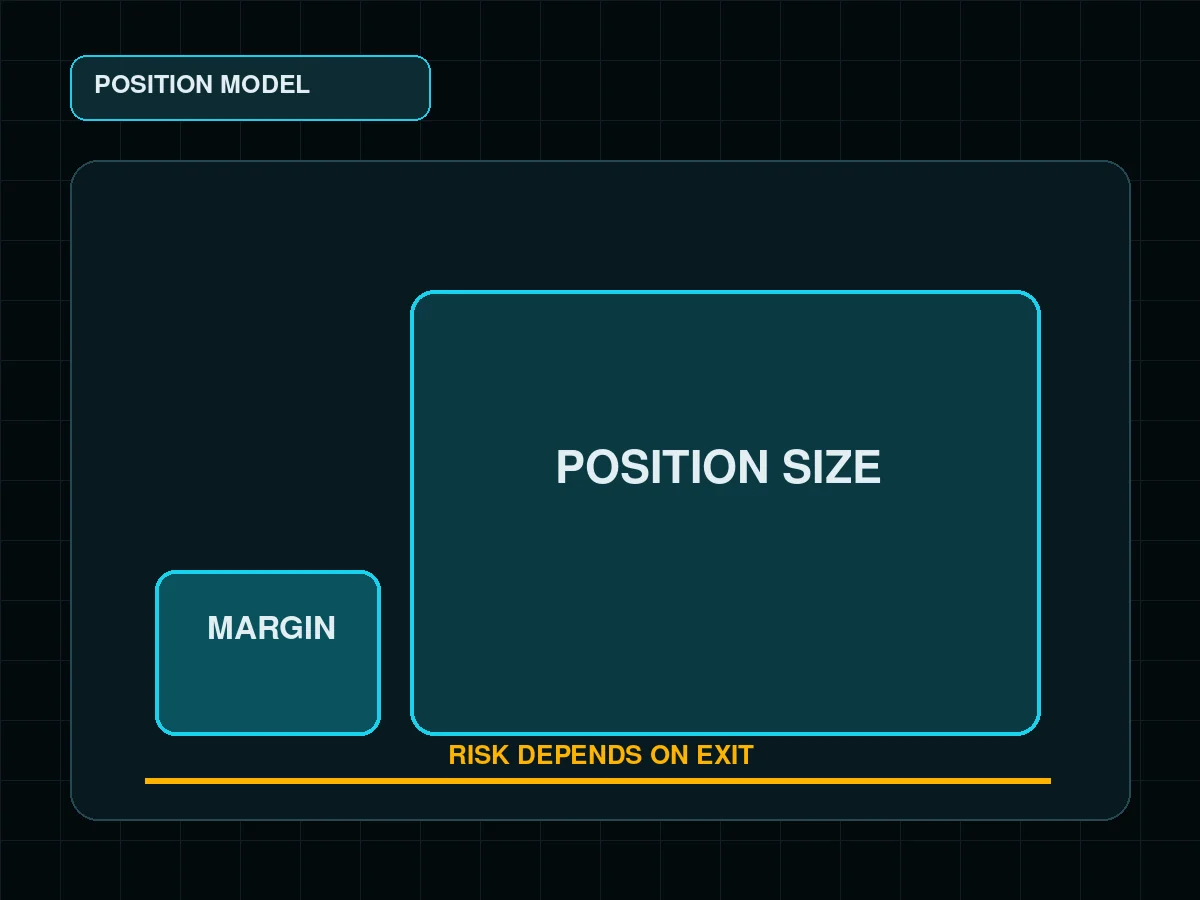
The detail people miss: funding is charged on the full position size, not on your margin. With 10x leverage you pay on ten times the money you put in.
| Your margin | Leverage | Position | Rate per 8h | Paid per period | Paid per day | Share of your margin per day |
|---|---|---|---|---|---|---|
| $1,000 | 1x | $1,000 | 0.01% | $0.10 | $0.30 | 0.03% |
| $1,000 | 10x | $10,000 | 0.01% | $1 | $3 | 0.3% |
| $1,000 | 10x | $10,000 | 0.1% | $10 | $30 | 3% |
The last row is the trap: 3% of your money per day just for holding the position, while the price may not move at all. On a one-hour trade funding is invisible. Over weeks it decides the result.
04Funding as a sentiment gauge#
The useful side of funding is reading it, not paying it. It is one of the few honest sentiment gauges: it shows not what analysts think but where traders actually put money, and what they are willing to pay to keep it there.
- Near zero: balance, no crowd on either side.
- High and positive for a long time: the market is overloaded with longs. Most people who wanted to buy already did, so the fuel for further gains is thinning.
- Sharply negative: panic and too many shorts. This often happens near a bottom, when it is already late to sell.
The logic is similar to the Fear and Greed Index, but funding is measured in money people pay, not in a composite of other inputs.
05Why extreme funding ends in cascades#
Extreme funding usually means the crowd sits on one side with leverage. That structure is fragile.
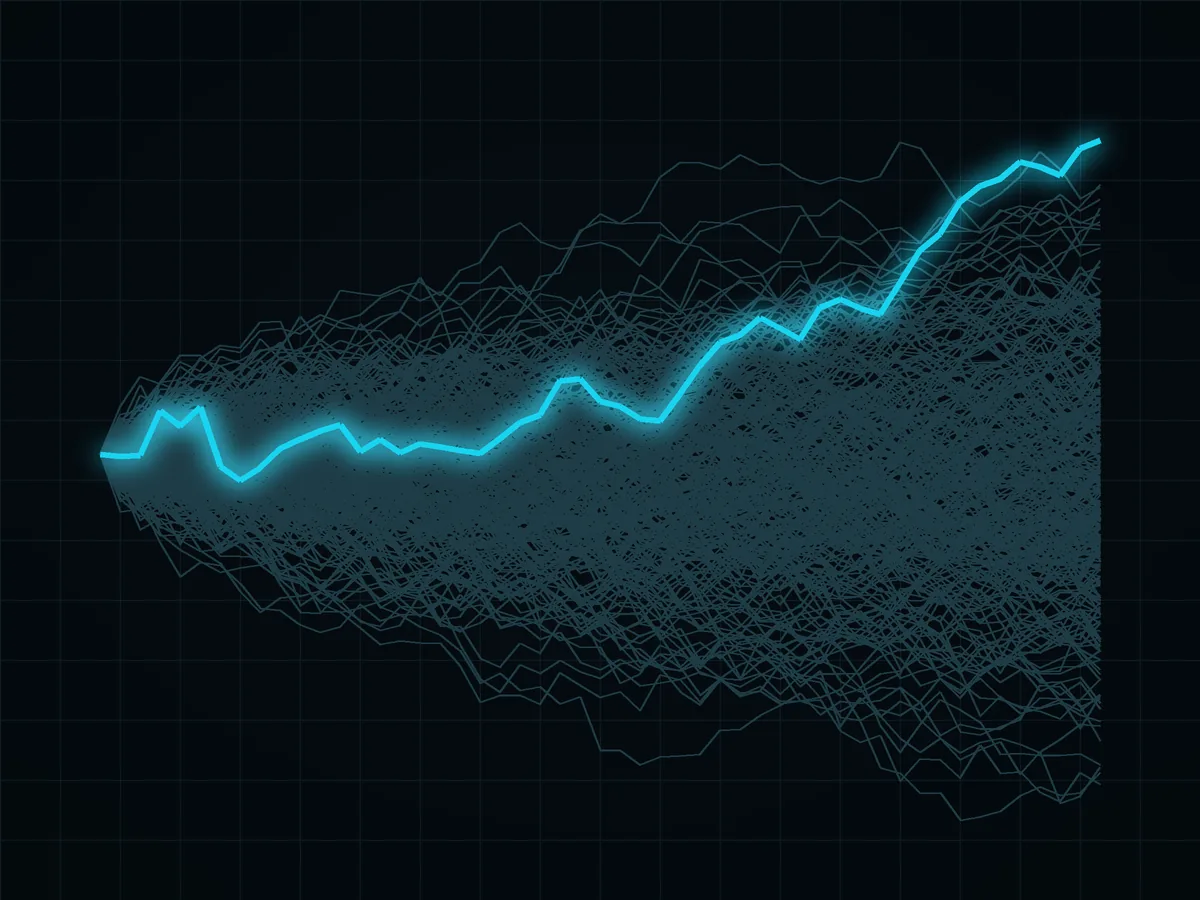
A small move against the crowded side starts liquidations. Each liquidated long is a forced market sell, which pushes the price lower, which triggers the next liquidations. That is how a cascade builds: price covers in minutes what usually takes days. It is not magic or a market maker's plot. The overloaded side gets taken out by its own leverage.
06What to do with it#
- Check the rate before you enter, not after. The terminal shows it next to the contract price, with a countdown to the next payment.
- Count the settlement times, not the hours. Funding is charged if you hold a position at the settlement moment. Seven hours between two settlements can cost nothing; one minute across a settlement costs a full period. The mechanics are in perpetual futures explained.
- Holding longer than a day? Add funding to the cost of the trade, next to fees and the spread.
- Do not build a thesis on funding alone. It tells you how the crowd is positioned, not where price goes.
- For a long-term hold, use spot. There is no funding on spot. Perpetuals were built for trading, not for carrying an idea for years.
Funding is not fine print. It is a mechanism that moves money from the crowded side of the market to the empty side on every settlement. Not knowing about it means paying regularly for something you do not understand. Knowing about it means you can see where the crowd sits and avoid joining it by default.
FAQ#
What is the funding rate in crypto?
Does the exchange keep the funding fee?
How often is funding paid?
Is funding charged on my margin or on the full position?
Is a high funding rate a reason to short?

DoberInvest on Telegram
Questions about this guide?Ask in the English channel. That is also where we post charts, the levels we watch and what would change our mind. A system, not signals, and no profit promises.
This guide explains how the mechanics work; what you do with them is your own decision. Trading can lose you money, and leverage makes losses bigger and faster. 18+

Founder of DoberInvest, in the market since 2018. Teaches a system, not signals.