


In this guide 10
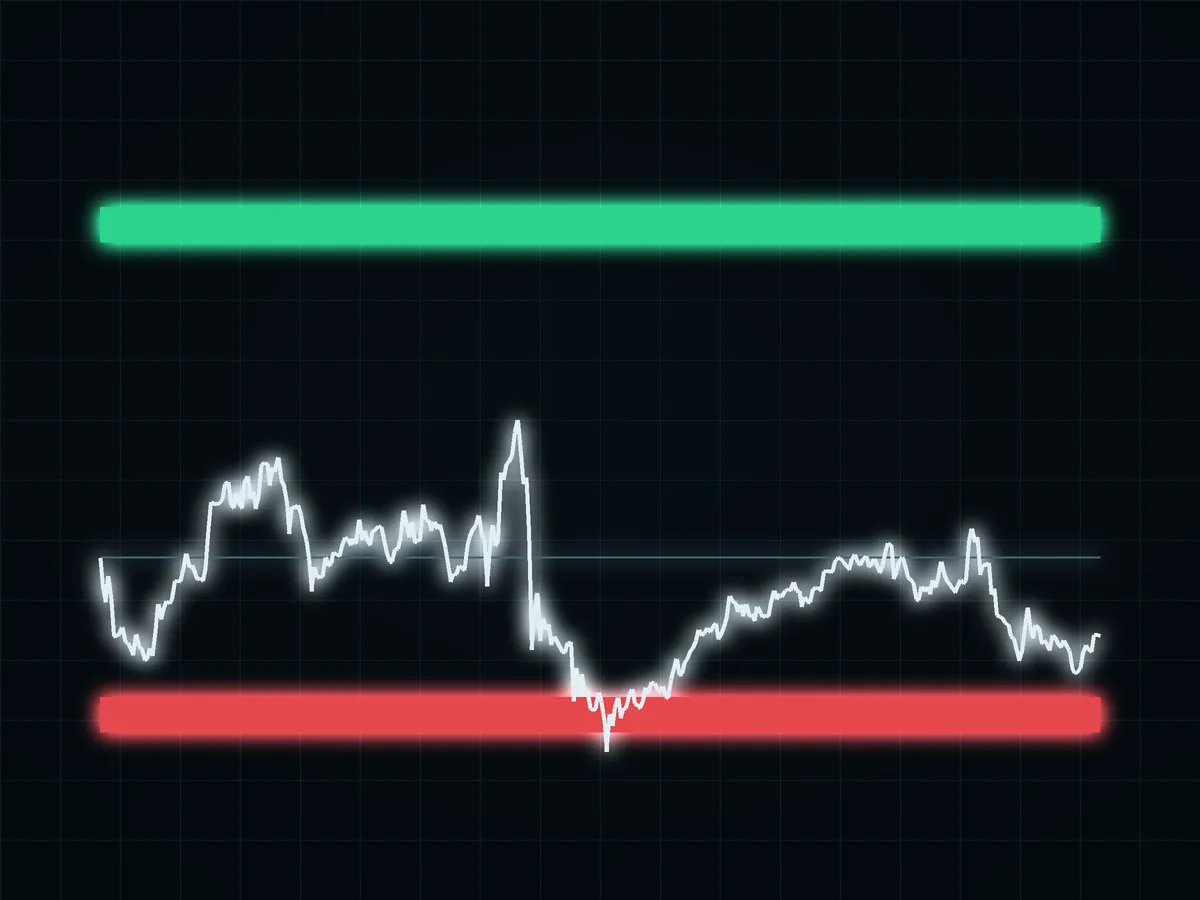
A take profit defines an intended profitable exit. A stop loss defines the price that triggers an intended risk exit. Neither order proves that the displayed price or full quantity will execute.
The useful sequence is: define invalidation, calculate cash risk, size the position, choose a plausible target, then inspect how the venue implements each order. A ratio is checked near the end. It does not create an edge.
01Step by step#
- Mark the price where the trade thesis is no longer valid.
- Choose the maximum cash loss for the position.
- Divide that cash loss by the stop distance to calculate position size.
- Identify a target supported by market structure, not only by a preferred ratio.
- Add expected fees and slippage to both outcomes.
- Check trigger price, order type, reduce-only behaviour and cancellation rules.
The position-size calculator handles the loss budget. The risk-reward ratio page separates planned payoff from realized payoff.
02A transparent payoff model#
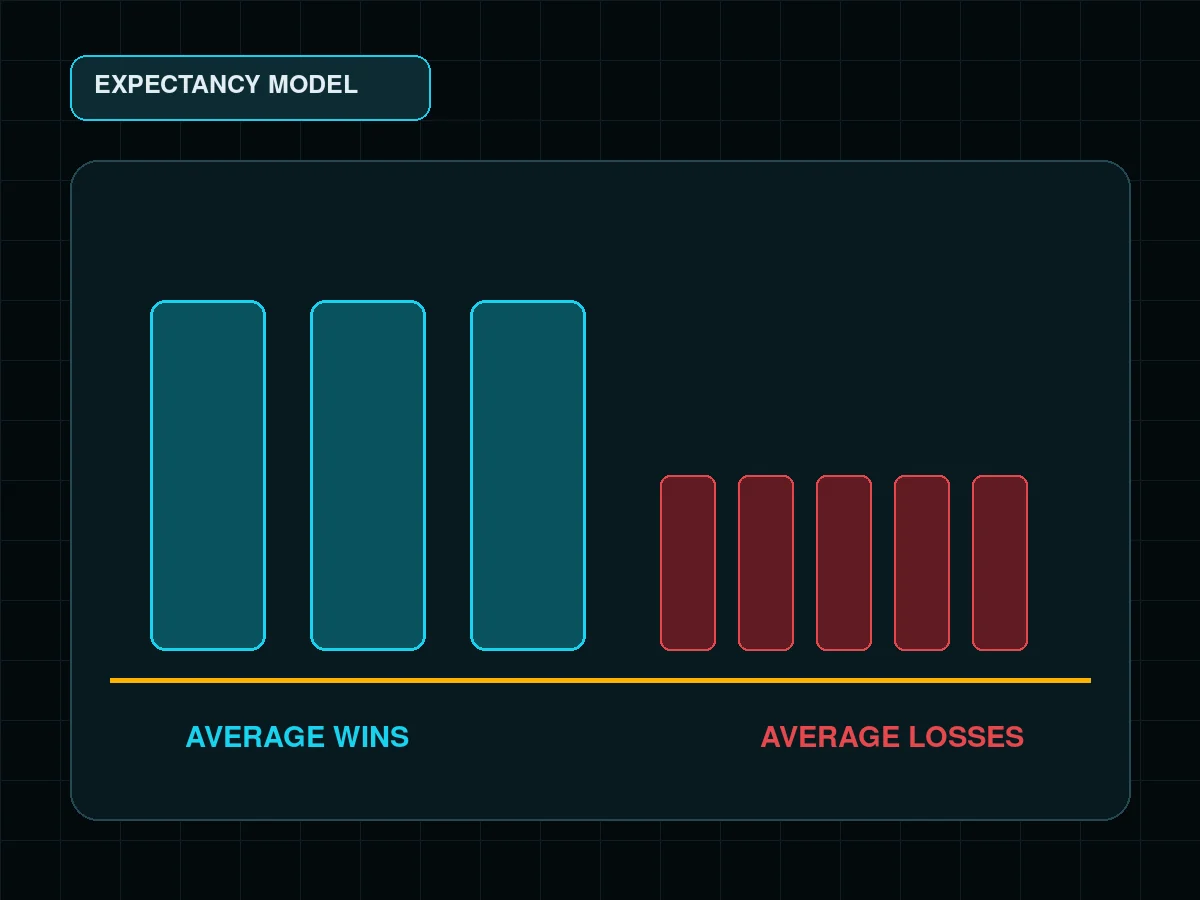
Illustrative model: assume a $10,000 position, a stop 1% or 0.01 from entry and a target 2% or 0.02 from entry. The gross loss at the stop is $100, the gross gain at the target is $200, and the gross payoff sum is $300.
If every winner gained $200 and every loser lost $100, the break-even win rate before costs would be:
$100 / ($200 + $100) = 33.3%
Now assume invented round-trip costs of $12 per completed trade. A net winner becomes $188 and a net loser becomes $112. Their sum is $300. The model break-even rate becomes:
$112 / ($188 + $112) = 37.3%
The example assigns no hit frequency to either level. It only shows that costs change the payoff distribution and the win rate required to offset losses.
03Why a wider target is not automatically better#
A target several times the stop distance offers a larger gross winner, but price must travel farther. The hit rate can fall. Without evidence about entries and exits, insisting on one fixed ratio only changes the assumption.
Track realized net winners and losers in a trading journal. Then calculate the observed break-even rate with the method in break-even win rate. Keep markets, timeframes and rule sets separate so one average does not hide unlike trades.
04Stop trigger is not final execution#
A stop price usually triggers another order. A stop-market implementation prioritizes execution, but the fill can be worse than the trigger during a gap or fast move. A stop-limit implementation controls the limit price, but some or all of the position can remain open.
Venue price protection can also cancel a remainder beyond a boundary. That can reduce an extreme fill while leaving part of the exposure. Read the product's current rules and inspect the order status after a trigger.
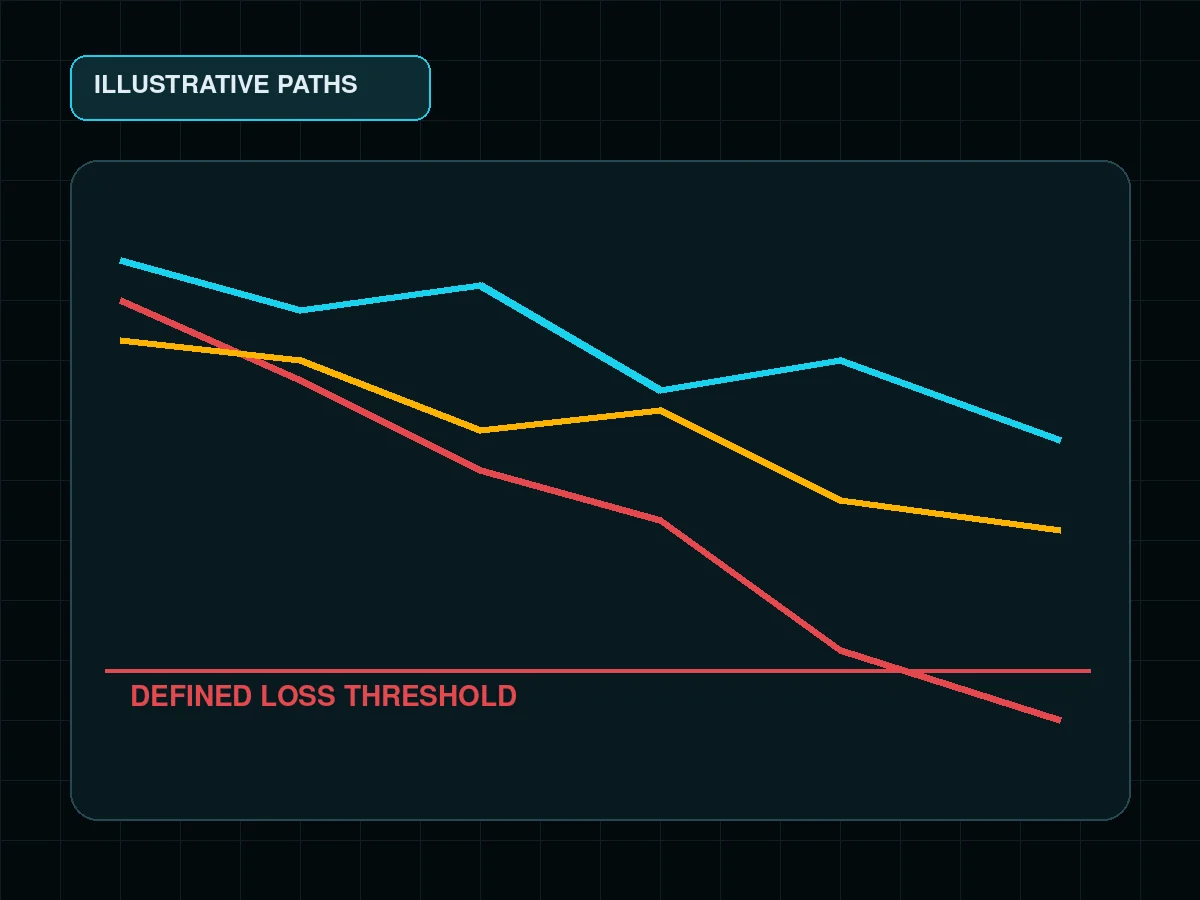
Because of these mechanics, a stop is a risk-control instruction, not an exact loss cap. Position sizing should leave room for execution beyond the modelled price.
05Take profit, limit orders and maker status#
A take-profit trigger can submit a market or limit order depending on the product and settings. A limit is not automatically a maker order. A marketable limit can execute immediately as taker; an order that rests can later receive maker treatment. Some fills can even have different classifications.
Use the fee shown in the final execution report. The limit versus market order guide explains price control, and order-book depth shows why larger quantities can fill across levels.
06Partial exits and changing size#
Illustrative partial-exit model: assume a 0.5 share closes at 1R and a 0.5 share closes at 2R. The weighted pieces are 0.5R and 1R, producing a 1.5R gross winner when both portions fill.
Moving a stop after a partial exit creates additional outcomes. Record each fill, fee and remaining quantity. Do not label a trade by the farthest target when only part of the position reached it.
07Common mistakes#
- Moving the stop farther after entry without recalculating cash risk.
- Choosing a target only to satisfy a preferred ratio.
- Assuming a stop-market order fills at its trigger price.
- Assuming every take-profit limit receives a maker fee.
- Ignoring correlated positions that can hit stops together.
- Measuring performance from chart levels instead of fill reports.
08Before placing both orders#
Confirm the trigger reference, quantity, time in force, reduce-only setting and what happens to the paired order after a partial fill. Simulate a gap through the stop and a target that fills only partly. The plan is ready for review only when those outcomes fit the account loss limit.
09Sources#
Primary mechanics checked November 5, 2026: Coinbase trading rules for market and limit orders, maker and taker treatment, partial fills and price protection. All monetary examples and costs above are explicitly invented MODEL inputs.
FAQ#
How do you set a take profit and a stop loss?
What is a good take-profit to stop-loss ratio?
Does a take-profit order always close the whole trade?
Does a stop loss cap the loss exactly?

DoberInvest on Telegram
Questions about this guide?Ask in the English channel. That is also where we post charts, the levels we watch and what would change our mind. A system, not signals, and no profit promises.
This guide explains how the mechanics work; what you do with them is your own decision. Trading can lose you money, and leverage makes losses bigger and faster. 18+

AI-assisted editorial model checked against the cited order rules; published by the DoberInvest editorial team, not as a claim of a real proprietary backtest.