




In this guide 6
In the futures order window there is a switch: isolated or cross margin. In isolated mode only the money assigned to that position can be lost. In cross mode your entire free balance stands behind every position. Cross pushes liquidation further away, but when it comes it takes the account, not just the trade. For a single leveraged position, isolated should be your default.
01First, what margin is#
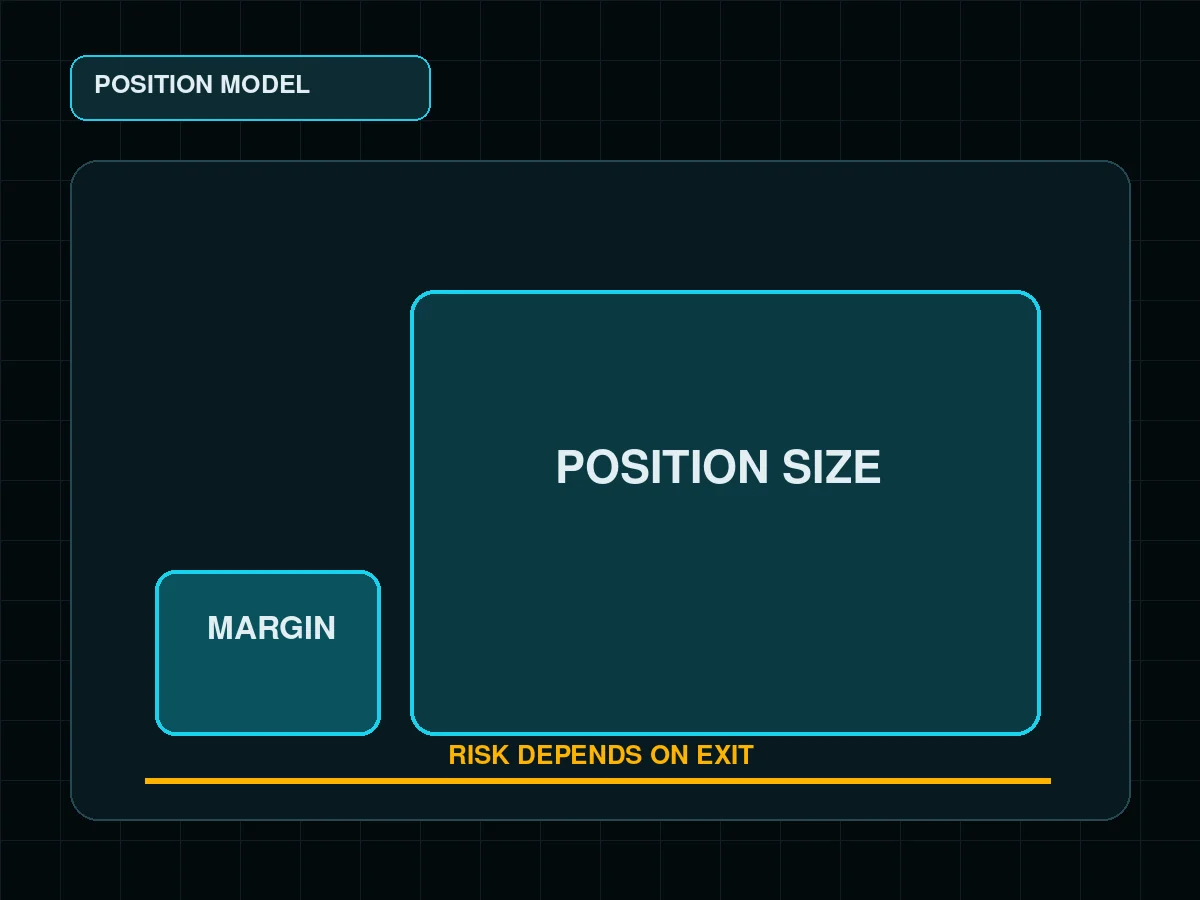
Margin is collateral: the amount the exchange holds against your position so it is never left covering your loss. It is not a fee and not a payment. Close the position and the margin comes back, plus or minus the result.
Funding on perpetual futures is also taken from this margin, which is why the mode you choose decides more than it seems. The real question is what counts as collateral.
02Two answers to one question#
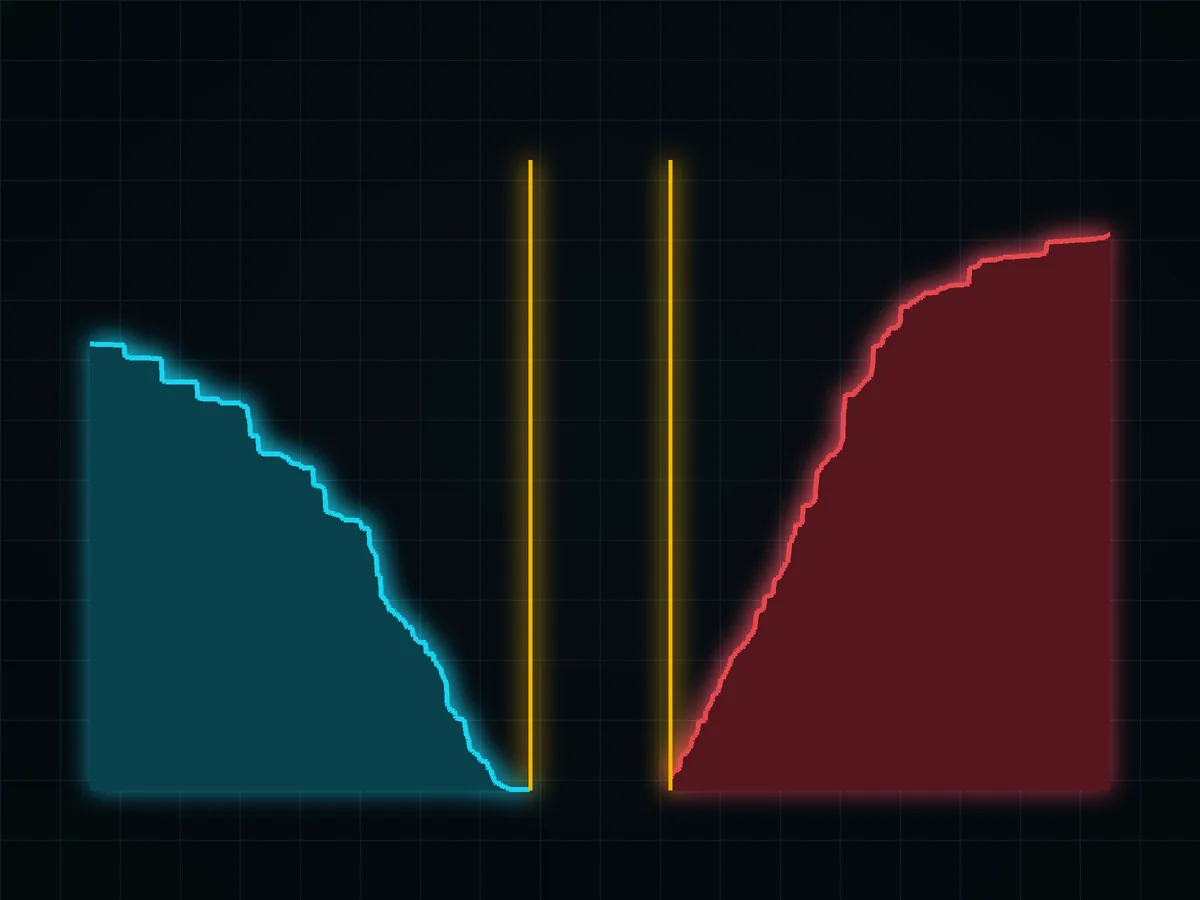
Isolated margin. You assign a specific amount to the position, and that amount is your maximum loss on it. If price reaches liquidation, you lose this collateral and nothing else. The rest of the account is not touched.
Cross margin. Your whole free balance is the collateral. As long as there is money in the account, it automatically props up the position. Liquidation comes much later, but when it comes, it does not take the margin of one trade. It takes the account.
| Isolated | Cross | |
|---|---|---|
| What backs the position | Margin you assigned | Entire free balance |
| Maximum loss on one trade | That margin | Up to the whole account |
| Liquidation distance | Fixed by your leverage | Further, grows with your balance |
| Adding funds | Manual | Automatic, from the balance |
| Best for | Single directional trades | Hedged sets of positions |
03The misconception that costs accounts#
Cross is often recommended as the "safer" mode, because a position will not be liquidated by a small move. The first half is true: liquidation really is pushed away. The second half is a swap.
Cross does not reduce risk. It relocates it. You trade an early liquidation of one position for a late liquidation of everything. That trade makes sense in one case: several positions that hedge each other, where profit on one supports the drawdown on another.
For a single leveraged position, cross means: the whole account is on the line, and nothing will stop the loss automatically. Isolated mode in the same situation would have stopped it at a known amount.
A worked example#
You have $5,000 in the account and open a $10,000 long at 10x, so the position needs $1,000 of margin.
- Isolated: the $1,000 is at risk. Liquidation sits roughly 9.5% below entry (the formula is in liquidation price explained). If it hits, you lose about $1,000 and keep about $4,000.
- Cross: the whole $5,000 backs the position. Liquidation moves to roughly 50% below entry, so it is far less likely. But the trade can keep losing all the way there. By the time it is closed, almost all of the $5,000 is gone.
Same entry, same idea, same market. The only difference is a switch you flipped before the trade, or never looked at.
04A routine that removes most problems#
- Choose the mode before the entry. On most exchanges you cannot change it while a position or orders are open on that contract, which is a good thing: the decision should not be made in panic.
- Check the liquidation price before you confirm the order. If it is closer than the instrument's normal daily move, the leverage is too high. That is arithmetic, not caution.
- Put your stop-loss before liquidation. Liquidation is not a stop. It is the exchange's emergency mechanism, it fills at the worst prices and takes the whole collateral.
- Use isolated by default until you have a clear reason for cross. "So the position lasts longer" is not a clear reason.
05Do this today#
- Check which margin mode your account uses right now. Many people never switched it and do not know.
- Open an order window with your usual size and look at the liquidation price. Compare the distance with the average daily range of the instrument.
- If the distance is smaller than a normal day's move, cut the leverage. Lower leverage is the only way to get more room.
Margin mode is step three of seven in how to trade crypto futures.
FAQ#
What is the difference between isolated and cross margin?
Is cross margin safer?
When does cross margin make sense?
Can I switch margin mode on an open position?
What happens to my margin when I close in profit?

DoberInvest on Telegram
Questions about this guide?Ask in the English channel. That is also where we post charts, the levels we watch and what would change our mind. A system, not signals, and no profit promises.
This guide explains how the mechanics work; what you do with them is your own decision. Trading can lose you money, and leverage makes losses bigger and faster. 18+

Founder of DoberInvest, in the market since 2018. Teaches a system, not signals.