




In this guide 7
"Never risk more than 1-2% of your account on one trade" sounds like timid advice. It is arithmetic. Risk per trade is how much of your account you lose if the stop is hit, and keeping it at 1-2% is what lets you survive the losing streaks every strategy goes through. The position size then follows from one formula: (account × risk) ÷ distance to the stop.
01Losses and recoveries are not symmetric#
Lose 10% and you need 11.1% to get back. Lose 50% and you need a full double. That is not rhetoric, it is division: the same percentage of a smaller base is a smaller amount.
| Drawdown | Gain needed to recover |
|---|---|
| 10% | 11.1% |
| 20% | 25% |
| 30% | 42.9% |
| 50% | a full double |
| 75% | four times the account |
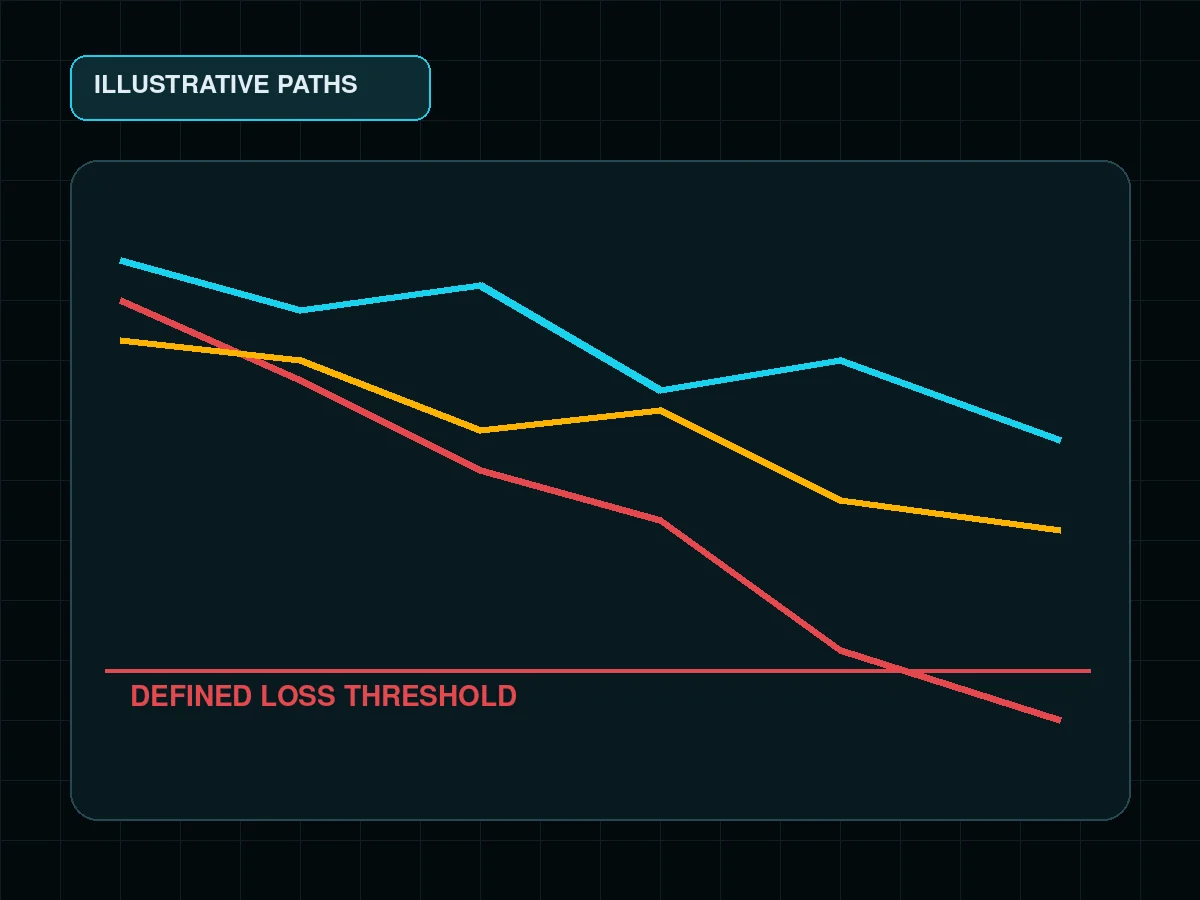
The first consequence: a deep drawdown is not just unpleasant, it changes the task. A trader at minus 50% is not solving the same problem as before. The problem is much harder.
02Losing streaks are normal, not a malfunction#
The second consequence matters more. Even a good strategy produces losing streaks. That is a property of chance, not a sign that something broke.
How often? We ran the numbers for streaks of losses within 100 trades:
| Win rate | At least 5 losses in a row | At least 8 | At least 10 |
|---|---|---|---|
| 60% | 46% | 3.6% | 0.6% |
| 50% | 81% | 17% | 4.4% |
| 40% | 98% | 49% | 20% |
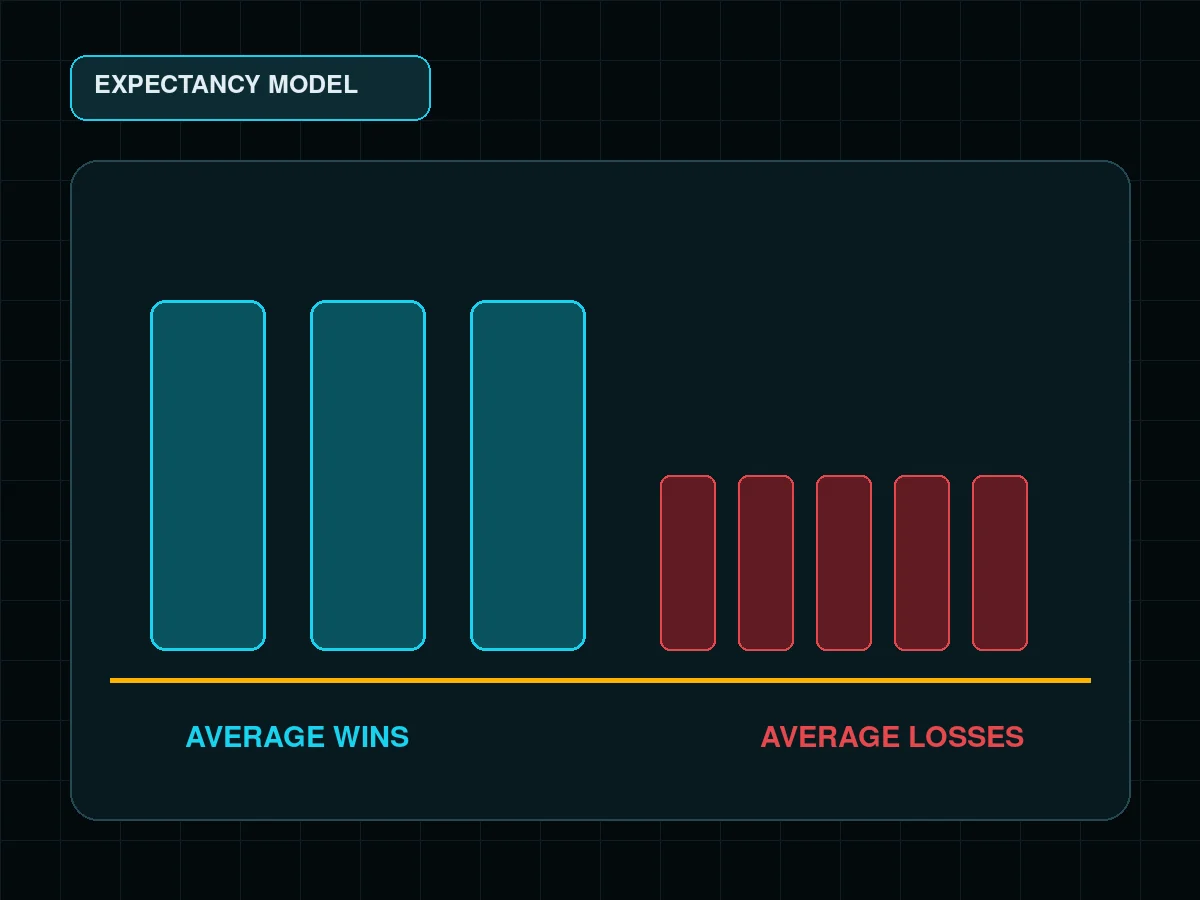
Many trend-following approaches win less than half the time and make it up on the size of the winners. For them, a streak of eight losses is close to a coin flip over 100 trades. Plan for the streak, not for the average.
03The same streak, different sizes#
Ten losses in a row, one strategy, four position sizes:
| Risk per trade | Account after 10 losses | Gain needed to recover |
|---|---|---|
| 1% | minus 9.6% | 10.6% |
| 2% | minus 18.3% | 22.4% |
| 5% | minus 40.1% | 67% |
| 10% | minus 65.1% | 187% |
The strategy is identical in every row. Only the size changed, and that alone makes the outcomes incomparable. At 1% you keep working. At 10% you need almost to triple the account just to get back to where you started.
04How to calculate position size#
The order is strict, and it is the reverse of what intuition suggests:
- How much you are willing to lose: a percentage of the account. Decide this before you look at the chart.
- Where the stop goes: where the idea stops working. Not "where it doesn't hurt", but where you admit you were wrong.
- The position size: calculated from the first two.
Position size = (account × risk per trade) ÷ distance to stop
Example: a $5,000 account and 1% risk means $50 at risk. The stop is 2.5% below the entry. Position size: $50 ÷ 0.025 = $2,000.
| Account | Risk | Stop distance | Position size |
|---|---|---|---|
| $5,000 | 1% ($50) | 2.5% | $2,000 |
| $5,000 | 1% ($50) | 5% | $1,000 |
| $5,000 | 2% ($100) | 2.5% | $4,000 |
Notice: the wider the stop, the smaller the position. That is the mechanism that stops a wide idea from turning into a wide loss. Fees and slippage add a little to the real loss, so traders who want precision subtract them from the risk budget first.
05Why people break the rule#
The position feels too small. At 1% risk the profit from one trade looks unimpressive, and the hand reaches to size up. The cost of that decision shows up on the tenth losing trade, not the first.
The stop goes "where it doesn't hurt". Then noise hits it, losing streaks get longer, and the rule starts to look like the problem.
Risk is counted from the position, not the account. "1% of the position" is a completely different number and a completely different level of protection.
Position size is the only part of a trade you control completely. Nobody controls the direction of the market.
06The bottom line#
One or two percent is not about caution. It is about staying in the game until your strategy has a chance to work. A losing streak will happen; the only question is how much of the account is left after it.
Before your next trade, write down three numbers: account size, risk in dollars, and distance to the stop. If you cannot fill in the third one, the trade is not ready yet.
FAQ#
Why 1-2% and not 5%?
Is the 1% of my account or of my position?
How do I calculate position size?
Are ten losses in a row realistic?
What should I do during a losing streak?

DoberInvest on Telegram
Questions about this guide?Ask in the English channel. That is also where we post charts, the levels we watch and what would change our mind. A system, not signals, and no profit promises.
This guide explains how the mechanics work; what you do with them is your own decision. Trading can lose you money, and leverage makes losses bigger and faster. 18+

Founder of DoberInvest, in the market since 2018. Teaches a system, not signals.