





In this guide 7
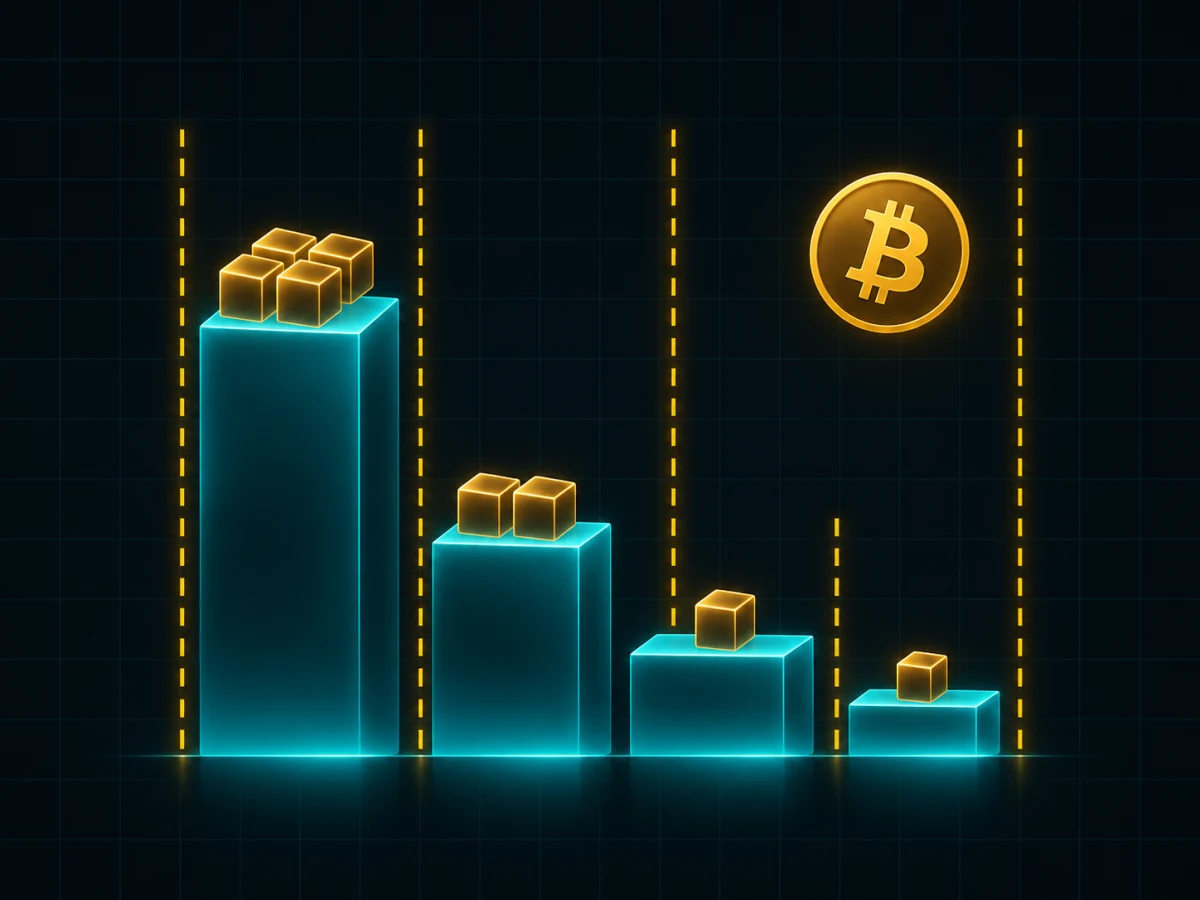
If you hold altcoins, one number explains a lot of what you feel about them: Bitcoin dominance (BTC.D), Bitcoin's share of the whole crypto market. When it rises, money is choosing Bitcoin over altcoins. When it falls, money is spreading out into the rest of the market. Check it before you buy an altcoin and you avoid fighting the flow.
01What Bitcoin dominance measures#
Bitcoin dominance is Bitcoin's market cap divided by the total crypto market cap. In late October 2026 Bitcoin was worth about $1.63 trillion out of roughly $2.74 trillion, so BTC.D stood near 59.5%.
On TradingView the ticker is BTC.D. Data providers count the total market slightly differently, so you will see small gaps between sites. Read the direction, not the second decimal.
02How to read it#
- Dominance rising: the market is careful, money sits in Bitcoin, altcoins usually lag. This happens in sell-offs (altcoins fall harder) and in rallies led by Bitcoin.
- Dominance falling: appetite for risk is growing and money rotates into altcoins. This is the setup for the "altseason" everyone waits for.
Watch dominance and you know whose hour it is: Bitcoin's or the altcoins'.
The four combinations are worth memorizing, because the same dominance move means different things depending on price:
| BTC price | BTC.D | What usually happens |
|---|---|---|
| Up | Up | Bitcoin leads, altcoins lag behind |
| Up | Down | Money rotates into altcoins, the altseason setup |
| Down | Up | Risk-off, altcoins fall harder than Bitcoin |
| Down | Down | Bitcoin falls harder, or cash is moving into stablecoins |
The last row is the one people misread. A falling BTC.D during a falling market is not an altseason. Often it simply means stablecoins grew as a share of the market because everything else got cheaper.
03The stablecoin problem#
Standard BTC.D divides Bitcoin by the total market, and the total includes stablecoins. That creates a distortion.
In late October 2026 USDT and USDC together were about 9.3% of the whole market. Remove stablecoins from the total and Bitcoin's share is about 65.6%, not 59.5%. Same Bitcoin, same day, six points of difference.
Why it matters in practice:
- Stablecoin supply grows, nothing else moves. If $10 billion of new stablecoins appear while every coin stays flat, BTC.D slips from 59.5% to about 59.3%. It looks like money left Bitcoin. Nobody sold a single coin.
- The whole market falls. Stablecoins hold their value, so their share rises and BTC.D tends to fall even if Bitcoin holds up better than altcoins.
That is why many traders also watch dominance excluding stablecoins. It answers the cleaner question: among assets that actually move, who is winning, Bitcoin or the rest?
04The math behind an altseason#
Dominance moves only when Bitcoin and the rest of the market move at different speeds. Two quick scenarios on the late October 2026 numbers:
- Altcoins up 20%, Bitcoin flat. BTC.D falls from 59.5% to about 56.0%. That is what a real rotation looks like.
- Bitcoin down 10%, altcoins down 15%. BTC.D barely moves, rising to about 59.9%, while your altcoin portfolio drops more than Bitcoin does.
So a small drop in dominance is not enough. An altseason shows up as dominance falling while altcoin prices rise. If dominance falls and prices fall with it, that is just a weak market.
05Bull and bear markets#
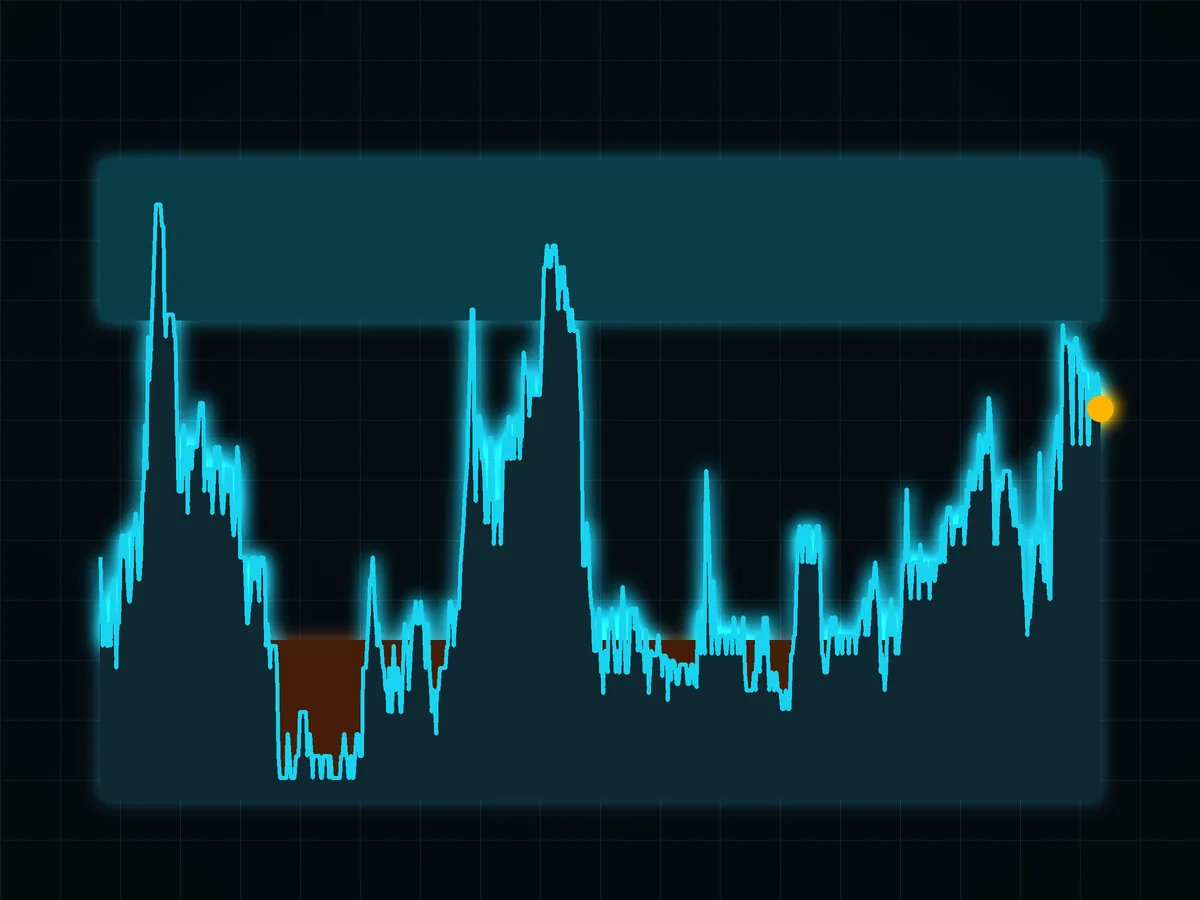
Bitcoin's share has also changed with the market itself. In the early years there were few altcoins and Bitcoin was almost the whole market. Thousands of tokens and large stablecoins later, the ceiling for dominance is lower than it used to be.
06How to use it before buying an altcoin#
- Open BTC.D next to the Bitcoin chart, on the same timeframe as your trade.
- Check the combination from the table above. Buying altcoins while dominance climbs and Bitcoin leads means swimming against the current.
- Look at the stablecoin-free version when the market is falling, so you do not mistake a sell-off for a rotation.
- Add USDT dominance for the "risk or cash" question. The two charts together take five seconds: USDT dominance explained.
- Decide your size before you decide your coin. Altcoins move harder than Bitcoin in both directions, so the same stop costs more. The math is in risk per trade.
Dominance does not say buy or sell. It says where the strength is. Buying altcoins while dominance rises firmly is fighting the flow. Waiting for it to turn down while altcoin prices climb is going with it.
FAQ#
What is Bitcoin dominance?
Does falling Bitcoin dominance mean altseason?
What is Bitcoin dominance excluding stablecoins?
Is high Bitcoin dominance bullish or bearish?

DoberInvest on Telegram
Questions about this guide?Ask in the English channel. That is also where we post charts, the levels we watch and what would change our mind. A system, not signals, and no profit promises.
This guide explains how the mechanics work; what you do with them is your own decision. Trading can lose you money, and leverage makes losses bigger and faster. 18+

Founder of DoberInvest, in the market since 2018. Teaches a system, not signals.