


In this guide 8
Funding rate arbitrage is a two-legged position: buy a coin on spot and short the same amount on a perpetual future. If the price rises, the spot leg gains what the short loses, and the other way round. What is left is the funding rate: when it is positive, longs pay shorts, and your short collects it at every settlement.
It is often sold as "around 11% a year at the baseline rate". That comes from 0.01% per 8 hours, three times a day, all year. We checked what it actually paid on BingX over the last 1,000 settlements, then took out fees and the capital the trade ties up.
01How the trade works#
- Buy 1 BTC on spot.
- Open a short of 1 BTC on the BTC-USDT perpetual, isolated margin, low leverage.
- Hold. Every 8 hours, if funding is positive, the short receives it.
- Close both legs at the same time.
Price risk cancels out between the legs. Funding does not: it is the income. The mechanics of the payment are in funding rate explained.
02What it paid: 1,000 real settlements on BingX#
From November 24, 2025 to October 23, 2026, every 8 hours on six perpetuals:
| Contract | Sum of funding received by a short | Per year at that pace | Average per settlement |
|---|---|---|---|
| BTC-USDT | 3.85% | 4.2% | 0.0039% |
| ETH-USDT | 3.47% | 3.8% | 0.0035% |
| SOL-USDT | 4.34% | 4.8% | 0.0043% |
| XRP-USDT | 5.74% | 6.3% | 0.0057% |
| DOGE-USDT | 7.62% | 8.4% | 0.0076% |
| NEAR-USDT | 8.10% | 8.9% | 0.0081% |
The "11% at baseline" assumes the rate sits at 0.01% every time. On BTC it never went above 0.0100% in those 1,000 settlements, and the average was 0.0039%. Real funding spends a lot of time below the baseline and sometimes below zero.
03Fees: four fills, and the break-even#
The trade needs four fills: buy spot, sell spot, open the short, close the short. At BingX base rates that is 0.1% + 0.1% on spot and 0.05% + 0.05% on the perpetual with market orders, 0.3% of the position in total. With maker orders on the perpetual it drops to 0.24%.
At each coin's average rate, the funding needed to cover 0.3% took:
- BTC: about 78 settlements, roughly 26 days.
- SOL: about 69 settlements, 23 days.
- NEAR: about 37 settlements, 12 days.
Anything shorter than that, on average, paid the exchange more than it paid you.
04Your capital is split in two#
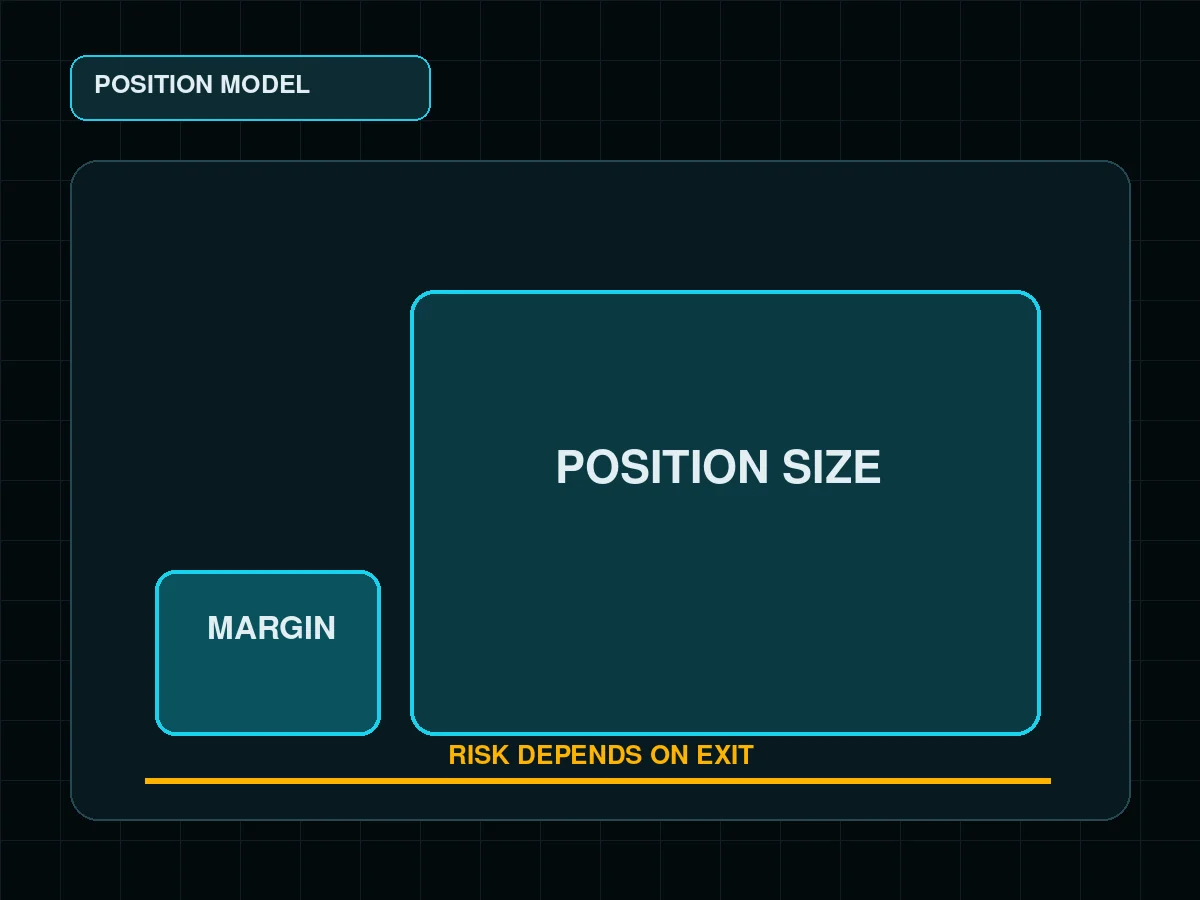
The headline percentage is on the position. Your capital has to fund both legs: the coins and the margin for the short. With $10,000:
| Short leg margin | Position size | BTC, 11 months, after fees | NEAR, 11 months, after fees |
|---|---|---|---|
| 1x | $5,000 | 1.78% of capital | 3.90% |
| 2x | $6,667 | 2.37% | 5.20% |
| 3x | $7,500 | 2.66% | 5.85% |
Raising leverage on the short leg puts more of the capital to work. It also moves the short's liquidation price closer, and that is the real risk of the trade.
05The risks, with numbers#
Funding turns negative. Then the short pays. Looking at every 30-day window in the period, funding on BTC summed to less than zero in 15% of them, on ETH in 17%. A trade opened at the start of such a window lost on funding as well as on fees.
The short gets liquidated in a rally. The two legs are hedged in value but sit in different places: the coins in your spot wallet, the short on the futures account with its own margin. If the price runs up fast, the short loses margin and can be liquidated, even though the spot leg is up by the same amount. Over the last year:
- BTC rose 31.6% from a low to a high within 30 days (August 14 to September 3, 2026). A 3x short is liquidated at about +32.7%, so it would have come within about 1% of liquidation.
- NEAR rose 213.5% within 30 days (August 29 to September 27, 2026). No short leg survives that without fresh margin.
The altcoins that pay twice the funding are exactly the ones that make this happen. The formula for the short's liquidation level is in liquidation price explained.
Basis and execution. The spot and perpetual prices are not identical at the moment you open or close. A gap of 0.1% between them on entry costs as much as several days of funding.
Exchange risk. Your coins and margin sit on an exchange. The yield is small; losing the deposit to a platform failure is not.
06Who this trade is for#
- Someone who already holds the coin long term and wants it to earn a little while it sits. The short leg turns holdings into a hedged position.
- Larger balances with maker access, where 0.3% of fees becomes 0.24% or less.
- Patient holders. Weeks, not days. Shorter holds mostly pay fees.
It is not a way to make a small account grow fast. On BTC the realistic result was low single digits a year on the capital, with tail risks on top.
07How to run it carefully#
- Use the same coin and size on both legs.
- Keep the short on isolated margin at 1x-2x, and keep spare USDT ready to add margin if the price runs.
- Check funding history for the past month before entering, and the countdown to the next settlement.
- Close both legs together. An unhedged leg left open is a directional trade you did not plan.
- Recheck weekly: funding sign, short margin, and whether the trade still pays after fees.
Shorting mechanics are in how to short crypto, and the full futures workflow is in how to trade crypto futures.
FAQ#
What is funding rate arbitrage?
Is funding rate arbitrage profitable?
What are the risks of funding rate arbitrage?
How does funding rate arbitrage work step by step?
Why are altcoin funding rates higher?

DoberInvest on Telegram
Questions about this guide?Ask in the English channel. That is also where we post charts, the levels we watch and what would change our mind. A system, not signals, and no profit promises.
This guide explains how the mechanics work; what you do with them is your own decision. Trading can lose you money, and leverage makes losses bigger and faster. 18+

Founder of DoberInvest, in the market since 2018. Teaches a system, not signals.