


In this guide 8
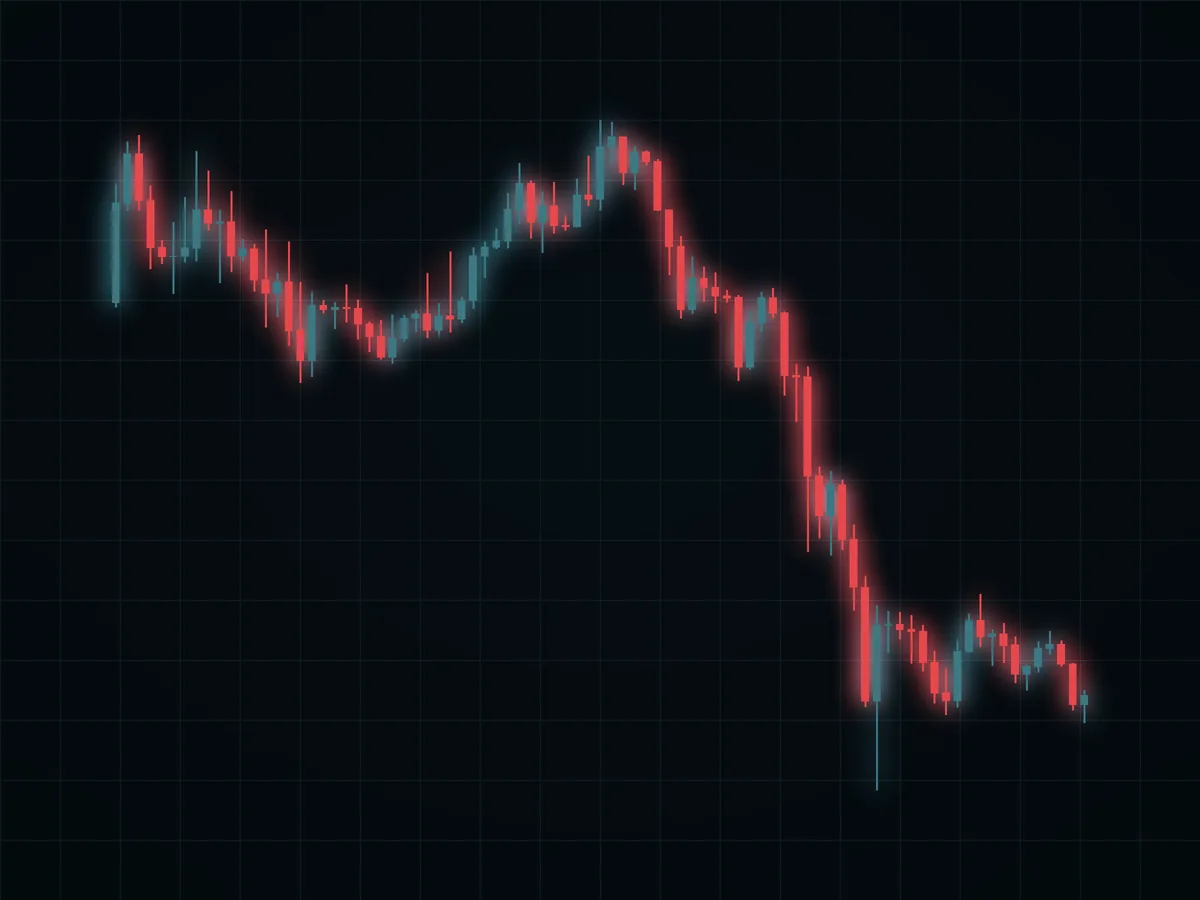
To short crypto, you sell first and buy back later: you profit if the price falls and lose if it rises. The usual way is a short on a perpetual futures contract: pick the contract, choose isolated margin and low leverage, press Sell/Short, and place a stop above the price where your idea is wrong. The catch is the asymmetry. Your gain stops when the price reaches zero. Your loss has no natural limit.
Below: the methods side by side, the steps on a futures exchange, what a short really earned or paid in funding over the last year, and how often a squeeze would have taken it out.
01How a short makes and loses money#
You open a short on one unit at 100.
- Price falls to 50: you buy back at 50, +50.
- Price falls to zero: +100. That is the ceiling.
- Price rises to 200: -100.
- Price rises to 300: -200.
A long can lose at most what it cost. A short can lose several times what it could ever make. That is why a short without a stop is a much worse idea than a long without one.
02Ways to short crypto#
| Method | What you actually do | Cost while you hold | How much you can lose |
|---|---|---|---|
| Perpetual futures | Sell a contract that tracks the price | Funding every few hours, paid or received | Your margin on isolated; the balance on cross |
| Dated futures | Sell a contract with an expiry date | Price gap to spot, rolling to the next contract | Same as perpetuals |
| Spot margin | Borrow coins, sell them, buy back later | Interest on the borrowed coins | Your collateral |
| Put options | Buy the right to sell at a set price | The premium, paid upfront | The premium |
| Inverse products, CFDs | Buy a product that rises when the coin falls | Product fees, financing | Depends on product; availability varies by country |
For most people on crypto exchanges, perpetual futures are the default: one click, no borrowing, both directions on the same screen. The full process for futures is in how to trade crypto futures. Spot margin works too, but you pay interest on the coins you borrow, and the rate is set by the exchange per coin.
03How to short on a futures exchange, step by step#
- Pick a liquid USDT-margined perpetual. BTC or ETH first. On thin altcoins the order book is shallow and squeezes are sharper.
- Choose isolated margin. Then the most you can lose on this trade is the margin you post for it. See isolated vs cross margin.
- Find your stop first. For a short, it goes above entry, at the price where your reason to short is no longer true.
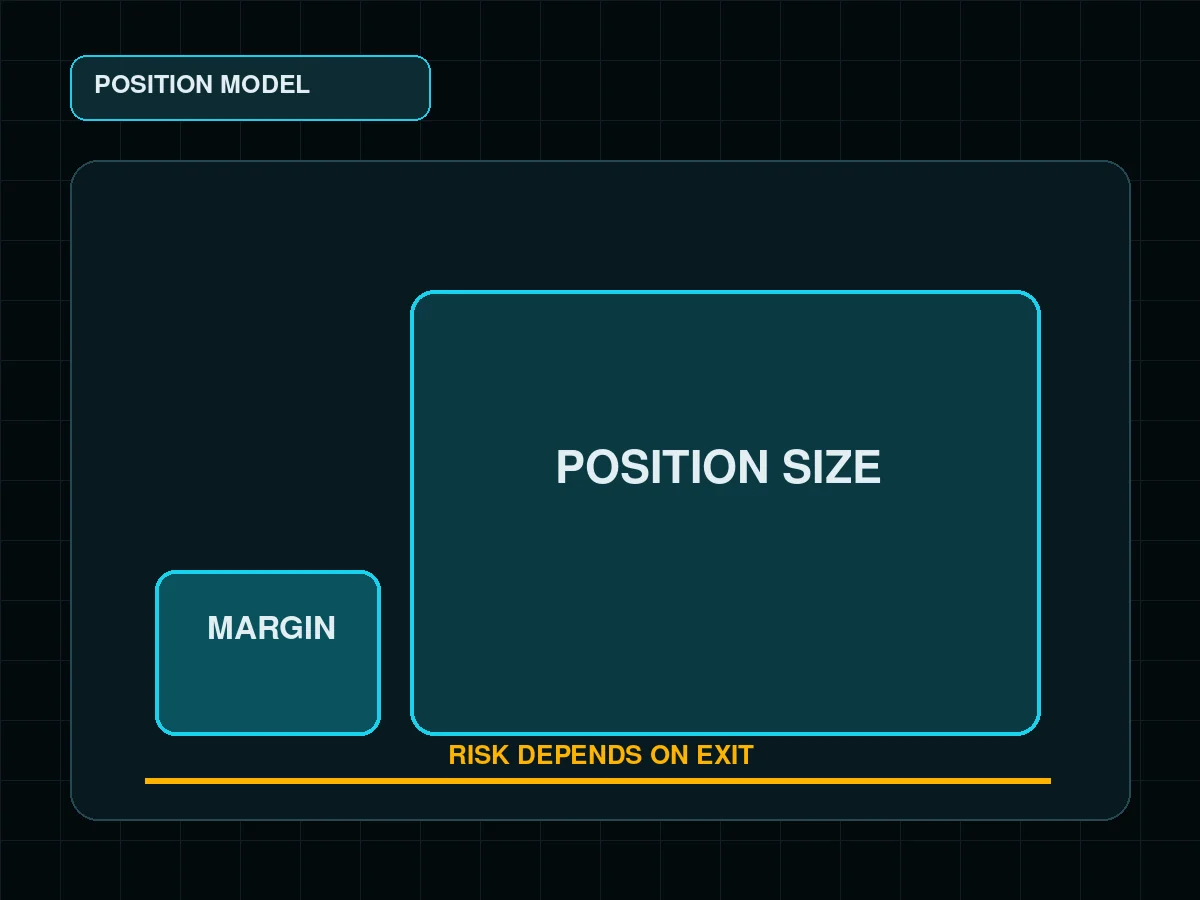
- Size the position from the stop. Account × risk % ÷ stop distance. A $10,000 account, 1% risk and a 5% stop give a $2,000 position. Method in risk per trade.
- Set leverage last, low enough that liquidation sits far above the stop.
- Open the short. Sell/Short with a limit order if you can wait, market if you cannot.
- Attach the stop as a buy stop on the same order, and check the liquidation price the terminal shows. If it is closer than your stop, lower the multiplier.
A real example. BTC traded around 81,715 on October 23, 2026. A stop 5% above entry sits near 85,801. With a 0.5% maintenance margin rate (illustrative; your contract card shows the real one), liquidation sits near:
| Leverage | Liquidation near | Distance above entry |
|---|---|---|
| 2x | 121,963 | 49.3% |
| 3x | 108,412 | 32.7% |
| 5x | 97,571 | 19.4% |
| 10x | 89,440 | 9.5% |
At 2x to 10x the stop comes first, which is what you want. The formula is in liquidation price explained, and how to pick the level is in leverage trading explained.
04What a short earned in funding over a year#
On perpetuals, longs and shorts pay each other a funding rate. When it is positive, longs pay shorts. Crypto spends most of its time with positive funding, so a short is often paid to wait. How much? We pulled 1,000 settlements of the BingX BTC-USDT perpetual, November 24, 2025 to October 23, 2026, every 8 hours:
- Funding was positive in 78.6% of settlements, so a short received it.
- Added up, a short held through the whole period would have received 3.85% of the position value. For ETH it was 3.47%, for SOL 4.34%.
- The last 90 days: 1.54% on BTC. The last 30 days: 0.62%.
- But the longest run of negative settlements, when shorts paid, was 49 in a row. That is about 16 days.
So funding can help a short, a little. It is not a reason to short. On a $10,000 BTC short, those 11 months of funding would have added up to about $385, and a single 4% move against you costs $400. Funding also flips sign exactly when everyone piles into shorts, which is when you least want to pay. The mechanics are in funding rate explained.
05Short squeezes: why the upside is the dangerous side#
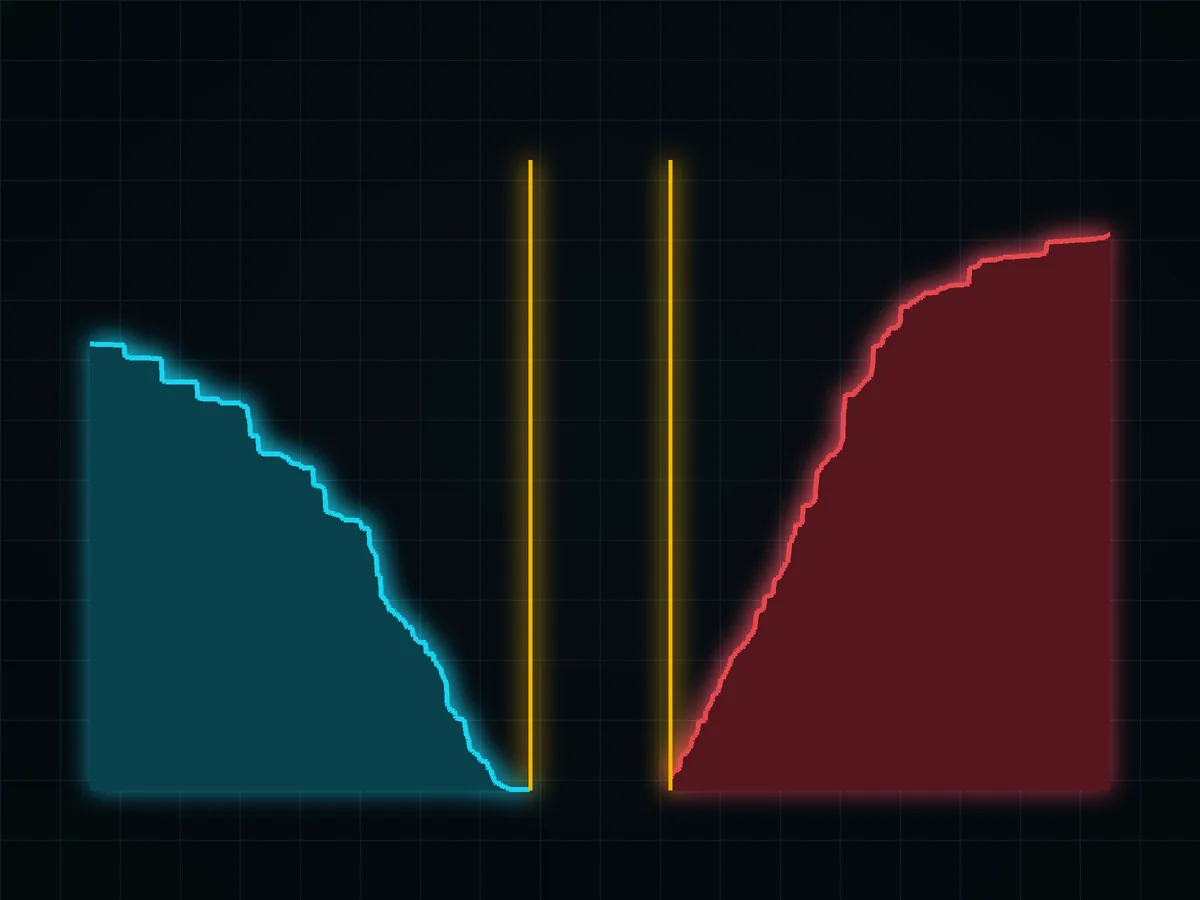
Every short has two buy orders waiting above the market: its stop and its liquidation. When price rises into a cluster of them, they fire as market buys, push price up, and set off the next cluster. That chain is a squeeze.
How often does the market move far enough in one day to liquidate a short? We took 365 daily candles (October 23, 2025 to October 22, 2026) and counted the days when the high reached a short's liquidation level, for a short opened at the daily open:
| Leverage | Liquidation above entry | BTC days | ETH days | SOL days |
|---|---|---|---|---|
| 5x | 19.4% | 0 | 1 | 0 |
| 10x | 9.5% | 1 | 7 | 6 |
| 20x | 4.5% | 22 | 47 | 59 |
| 50x | 1.5% | 142 | 189 | 205 |
The biggest single-day rise from the open in that year was 14.1% on BTC (February 6, 2026), 21.7% on ETH (August 19, 2026) and 16.6% on SOL (February 25, 2026). A short at 10x opened at the start of any of those days was liquidated the same day, however right the idea looked the night before.
06Shorting to hedge coins you hold#
A short is also a way to protect coins you do not want to sell. Hold 0.1 BTC and open a short of 0.1 BTC on a perpetual: at the October 23 price, that is about $8,172 on each side.
- BTC falls 10%: the coins lose about $817, the short gains about $817.
- BTC rises 10%: the coins gain, the short loses the same amount.
- Funding: at the last 30 days' rate, the short would have received about 0.62% of its value, roughly $51.
The trap is on the short leg. The coins are in your wallet; the short sits on the exchange with its own margin. If BTC rises sharply, the short can be liquidated even though your total holdings are fine. Keep that leg at low leverage with spare margin, and remember that a hedge also removes your upside.
07When not to short#
- Because "it went up too much". Extended markets can stay extended for weeks, and shorts become the fuel.
- When funding is already deeply negative. Shorts are crowded and paying for it; the squeeze risk is at its highest.
- Into thin, freshly listed coins. The books are shallow, so a few large buy orders move the price a long way.
- Without a stop placed on the exchange. A mental stop on a short is a hope.
Shorting is a normal part of trading futures. Treat it like any other trade: a reason, a stop above it, a size from risk, low leverage. The difference is that the mistakes cost more on this side.
FAQ#
Can you short crypto?
Can you lose more than you invest when shorting crypto?
Do you pay funding when you short crypto?
What is a short squeeze in crypto?
Can you short crypto without leverage?
Is shorting crypto a good idea?

DoberInvest on Telegram
Questions about this guide?Ask in the English channel. That is also where we post charts, the levels we watch and what would change our mind. A system, not signals, and no profit promises.
This guide explains how the mechanics work; what you do with them is your own decision. Trading can lose you money, and leverage makes losses bigger and faster. 18+

Founder of DoberInvest, in the market since 2018. Teaches a system, not signals.