


In this guide 6
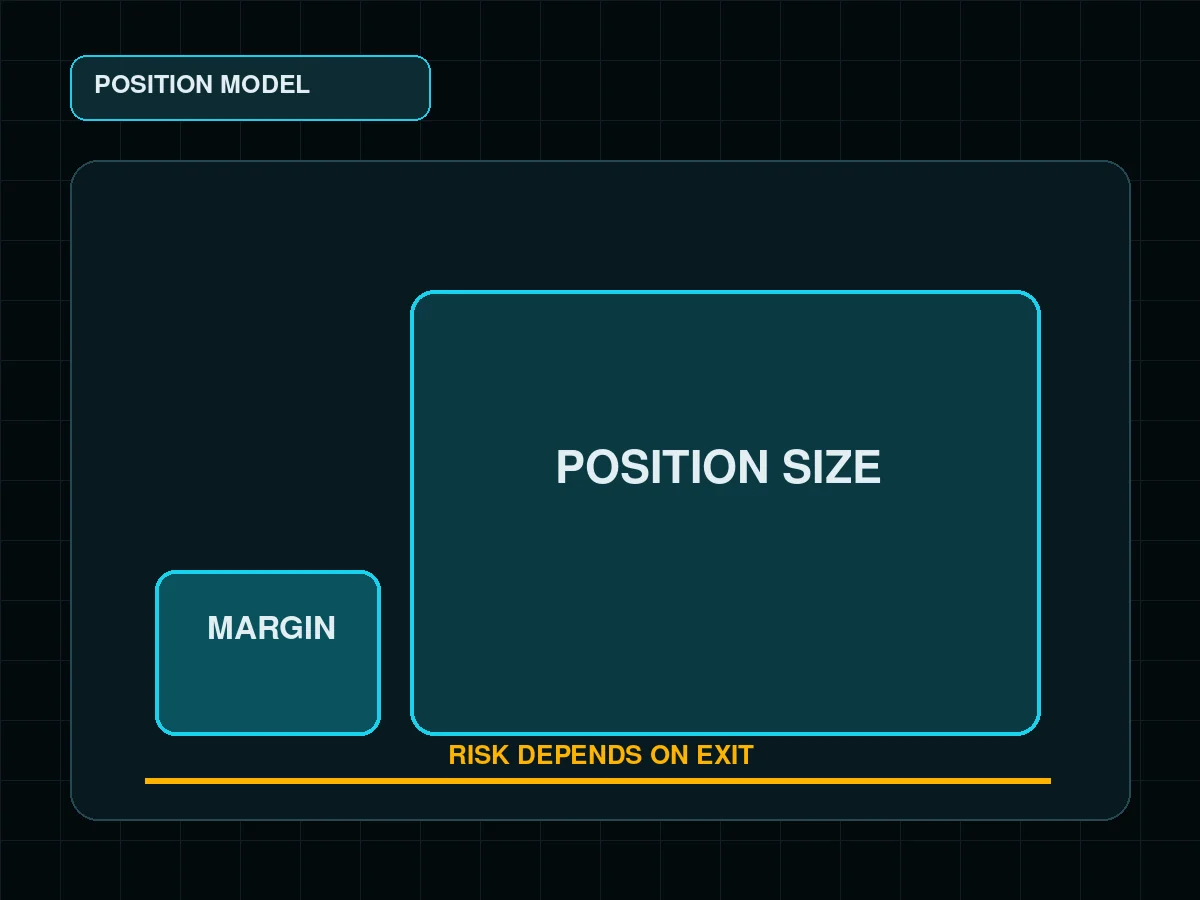
On spot you buy the coin itself: it sits in your account, you can withdraw it, and nobody can close the position for you. On futures you hold a contract on the coin's price: you never own the asset, you settle the difference. Leverage is usually named as the difference, but it is only a consequence. Shorting, margin, liquidation and funding all follow from one fact: you own the asset, or you argue about its price.
01Own it, or argue about the price#
Spot is buying the asset. You paid money and got a coin. You can send it to your own wallet. The position has no time limit: hold it for five years and nobody will touch it.
Futures is a contract. You have no coin and never will. You have an agreement with the exchange to settle the price difference. There is nothing to withdraw except the result.
Everything else comes from that:
- You can short, because selling a contract does not require owning the asset. On spot you can only sell what you have.
- You need collateral (margin), because the exchange has to secure your obligations.
- Liquidation is possible, because if the collateral runs short, the exchange closes the position without asking.
- Holding costs money, because perpetual contracts charge funding between longs and shorts at every settlement.
| Spot | Futures | |
|---|---|---|
| What you hold | The coin | A contract on its price |
| Withdraw the asset | Yes | No, only the result |
| Short selling | No | Yes |
| Collateral | Not needed | Margin |
| Forced close | Never | Liquidation |
| Cost of holding | None | Funding on perpetuals |
02Leverage does not multiply profit, it divides your margin of safety#
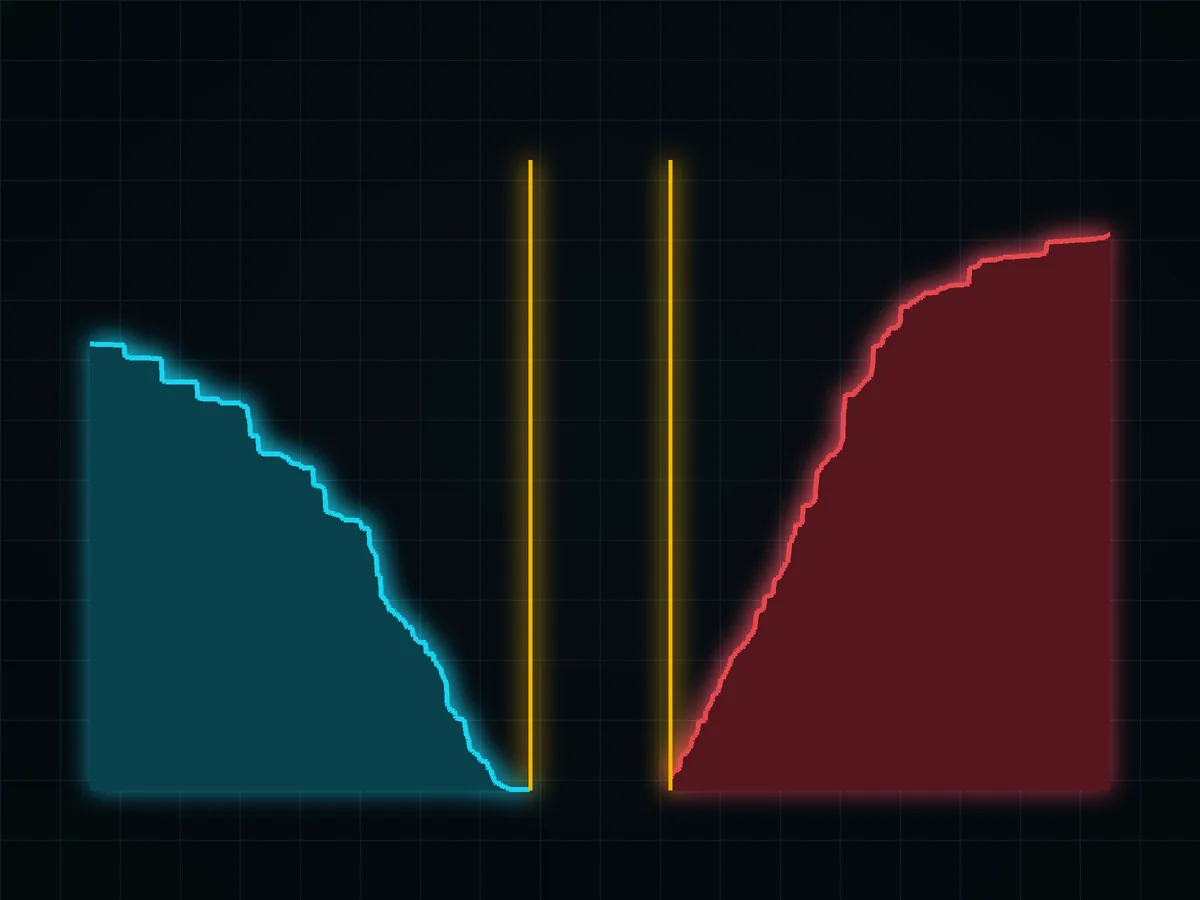
Leverage sounds like a profit multiplier. It works as a divider of how far the market can go against you before you are out.
Take a 20% drop with a $1,000 account:
- Spot. You have $800 left. The position is alive, and you can wait for a recovery as long as you like.
- Futures at 2x. You have about $600 left. Painful, but you are still in the trade.
- Futures at 5x. Liquidated. The position no longer exists, and whatever bounce comes next has nothing to do with you.
Look at the third case. The market could turn an hour later and run up. It changes nothing. You were right about the direction and still lost everything, because you did not survive the drawdown along the way.
Leverage does not make you more right. It shortens the distance the market has to travel against you to throw you out. The exact levels are in liquidation price explained.
03Two honest reasons to use futures#
Not for the leverage:
Shorting. On spot there is no way to profit from a decline. If you have a reasoned view that price will fall, futures are the way to express it.
Not tying up all your capital. Only collateral is locked, not the full amount, and the rest stays free. That is convenient, and exactly that convenience becomes a trap when free money starts to look like "room for one more position."
04What to know before your first leveraged trade#
- 1x leverage exists on futures. Nobody makes you take 10x. At 1x the price risk is close to spot, and shorting is still available.
- Liquidation is not "the exchange took my money". It is a forced close when collateral is no longer enough. It is calculated in advance and visible before you enter.
- The margin mode matters. Isolated or cross decides whether you can lose one position or the whole account. See isolated vs cross margin.
- The contract never expires, but the costs keep coming. How a perpetual stays near the spot price is in perpetual futures explained.
05Do this today#
- Open the futures section of your exchange and find where leverage is set. Just look at the default value: it is usually higher than it should be.
- Find the "liquidation price" line in the order window. It is calculated before you enter.
- If you only trade spot, you are not behind. Most goals can be met there, and no position will be closed without your say.
If you decide on futures, the order of work from contract choice to exit is in how to trade crypto futures.
FAQ#
What is the main difference between futures and spot?
Can I withdraw coins bought on futures?
Do I have to use leverage on futures?
Can the exchange close my spot position?
Where should a beginner start?

DoberInvest on Telegram
Questions about this guide?Ask in the English channel. That is also where we post charts, the levels we watch and what would change our mind. A system, not signals, and no profit promises.
This guide explains how the mechanics work; what you do with them is your own decision. Trading can lose you money, and leverage makes losses bigger and faster. 18+

Founder of DoberInvest, in the market since 2018. Teaches a system, not signals.